

Kanasu Stew
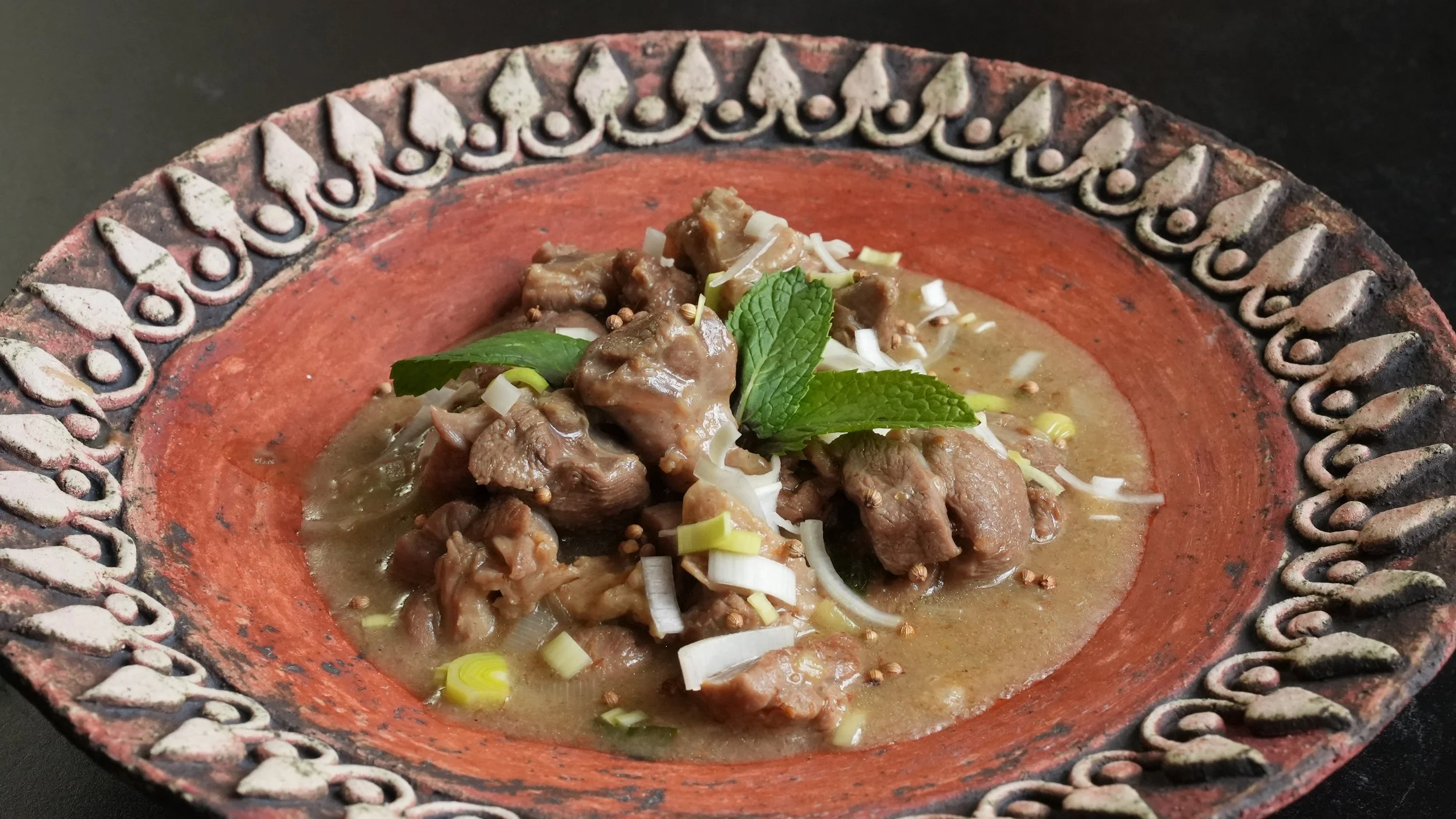
Lamb stew garnished with fresh leek and mint
City/Region: Babylon
Time Period: c. 1740 B.C.E.
Since this recipe is one of the oldest in the world, it’s bound to have some parts that are a little unclear. For starters, what does “prepare water” mean? Did they have to purify it? Add salt or something else to it? Was it maybe a more complicated process that was commonplace back then, but a mystery to us now? No one knows. Also, the ingredients kanasu, samídu, and šuhutinnu haven’t been definitively translated, so for this recipe, I’m going with what most scholars agree on, and also what I think will taste best.
With recipes this old, I think it’s important to not take it too seriously. It’s impossible to get it 100% right because we just don’t know enough about the language and the exact cooking processes they used. So for me, it’s less important that this dish is exactly what they’d be eating in Hammurabi’s time, and more important that it’s delicious. The meat is super tender, the flavors are well balanced, and the fresh leek gives it a nice crunch. Make this dish into a thinner broth-like soup, a thick stew, or thickened even further so that it’s like meat with a sauce. Any way is as accurate (or not!) as the next.
“Kanasu Stew
Leg of mutton is used. Prepare water, add fat. Samídu; coriander; cumin; and kanasu. Assemble all the ingredients in the cooking vessel, and sprinkle with crushed garlic. Then blend into the pot šuhutinnu and mint.”
Ingredients:
- 2 teaspoons coriander seeds, plus a little more for garnish if you’d like
- 1 teaspoon cumin seeds
- 3 tablespoons (45 g) fat*
- 1 1/2 lbs (680 g) lamb meat**, cut into bite-sized pieces
- 1 large shallot, minced
- 1 quart (1 L) water
- 1/4 cup (30 g) emmer flour
- 2-3 cloves garlic, crushed
- 1 small leek
- A handful fresh mint
- 1 tablespoon salt
*A popular fat at the time would have been from fat-tailed sheep, so if you can get it, use it. I used ghee, but you could also use basically any other fat. Tallow, butter, lard, sesame oil, and olive oil are all period-accurate options.
**I cut the meat off of two shanks, but you could use any cut you like. Pre-cut stew meat would work well.
Instructions:
- In a mortar, grind the coriander seeds and cumin seeds into a powder.
- In a large pot, heat about 1 tablespoon of the fat over high heat, then once it’s hot, add the meat. Let it cook for a couple of minutes, then move it around and continue to cook until it has browned a little. Remove the meat from the pot and set it aside.
- Add about another 1 tablespoon of fat to the pot. Reduce the heat to medium and add the shallots and a pinch of the salt. Stir to coat the shallots in the fat, and cook, stirring occasionally, for 3 to 4 minutes, or until they’re nice and fragrant.
- Add about 2 cups (500 ml) of the water and scrape up the browned bits from the bottom of the pot. Bring it to a simmer, then stir in the remaining fat, letting it melt if it’s a solid. Once it’s melted, stir in the ground coriander and cumin along with the rest of the salt. Stir in the rest of the water and the emmer flour. A whisk is helpful to incorporate the flour without leaving too many lumps. Bring the stew up to a boil and stir in garlic and meat.
- Reduce the heat to medium-low and let it come back to a simmer, then cover it and let it cook for about 30 minutes. Check on it every once in a while and add more water if you want a thinner soup-like consistency.
- While the stew cooks, chop the mint and the white and light green parts of the leek. I like to wash leeks before and after chopping them to be sure to get rid of any bits of dirt or sand stuck between the layers.
- After the stew has cooked for 30 minutes, remove the lid and stir in about half of the leek and most of the mint. You want to save a little of the mint for garnish. Let the stew cook without the lid for about 10 minutes, or until it has thickened however much you like.
- Stir in the rest of the leeks, then serve it forth with a little mint and whole coriander seeds for garnish.