

Old-Fashioned Old Fashioned
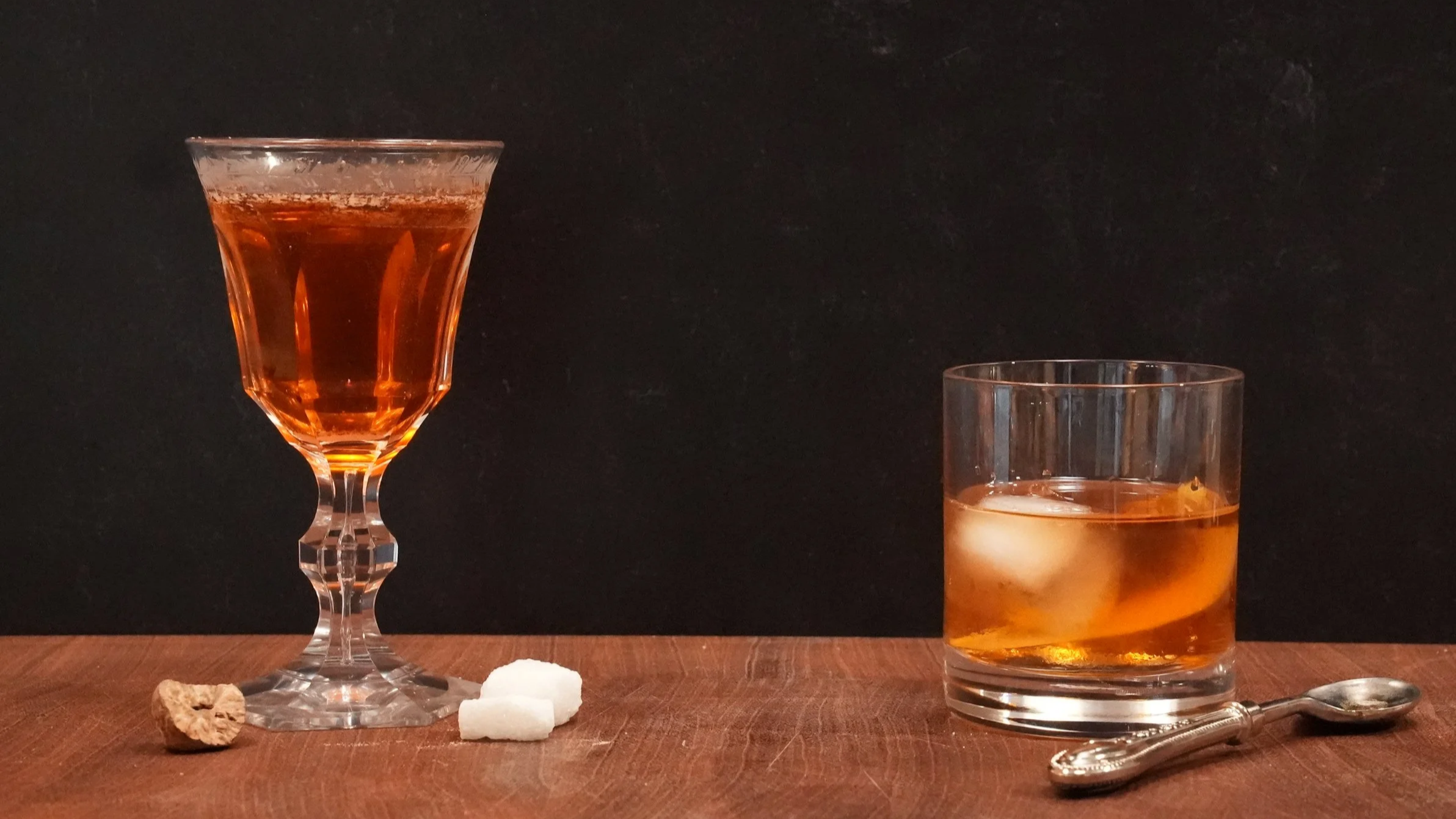
Two old-fashioned old fashioneds from 1806 and 1895
City/Region: United States of America
Time Period: 1806, 1895
The word cocktail seems to have emerged in the late 18th century, and back then it wasn’t referring to a whole host of mixed drinks, but to a drink. You had a glass of cocktail. The 1806 recipe here comes from a response to a question of what cocktail is, and while it could be made with any kind of spirits, it was specific in including sugar, water, and bitters.
About 30 years later, we get a more specific description that includes a ratio of water to liquor, and the addition of nutmeg, which I found delightful.
By 1895, long enough for people to wish for an “old-fashioned cocktail” rather than the new fangled ones, the old fashioned resembles the modern version, but with a lemon twist instead of orange.
The 1895 version is a lot stronger than the 1806 version, but both are delicious. I was surprised to really enjoy the nutmeg in the 1806 version, and we should definitely be adding it to more cocktails.
“Cock tail, then is a stimulating liquor, composed of spirits of any kind, sugar, water, and bitters.”
“…a third of the spirit to two-thirds of the water; add bitters, and enrich with sugar and nutmeg.”
“Dissolve a small lump of sugar with a little water in a whiskey-glass; add two dashes Angostura bitters, a small piece ice, a piece lemon-peel, one jigger whiskey. Mix with a small bar-spoon and serve, leaving spoon in the glass.”
Ingredients:
1806 Version
- 1 sugar cube
- Several drops of bitters*
- 2 ounces liquor*
- 3 ounces water
- Nutmeg
1895 Version
- 1 sugar cube
- 1 oz water
- 2 dashes Angostura bitters
- 1 ice cube, about the size of a small egg
- 1 strip lemon peel
- 1.5 ounces whiskey, I used rye
*See Notes below.
Instructions:
- For the 1806 version: Place the sugar cube in a cocktail glass. Back then, this resembled a small wine glass, and it would eventually become the martini glass.
- Add the bitters to the sugar cube. You want there to be enough so that all of the sugar absorbs some bitters.
- Muddle the bitters-soaked sugar, then add the liquor and water. Stir until the sugar has dissolved (or at least mostly).
- Grate a little fresh nutmeg on top, then serve it forth.
- For the 1895 version: Place the sugar cube in a rocks glass. Add the water, then muddle the sugar cube so that it mostly dissolves in the water.
- Add the bitters and ice, then twist the lemon peel over the glass and drop it in.
- Add the whiskey, give it a stir, and serve it forth with the spoon. For extra authenticity, after you’ve drunk the cocktail, use the spoon to eat any sugar remaining in the bottom of the glass.
Notes
They would have used Stoughton's bitters in 1806, but they don’t make them anymore. Bogart’s, Angostura, or Peychaud’s are all options that would have been around about 20 years after this recipe was written.
Rye whiskey was very popular at the time, so that’s what I used, but the historical recipe isn’t specific, so feel free to use what you like.
To get the same rye whiskey I used, check out the Drinking History with Max Miller collection at Curiada.
Some links on this site are affiliate links. If you buy something through them, it does not cost you anything more, but we will get a small commission which helps keep the site up and running. Thanks!