

Ancient Roman Snails
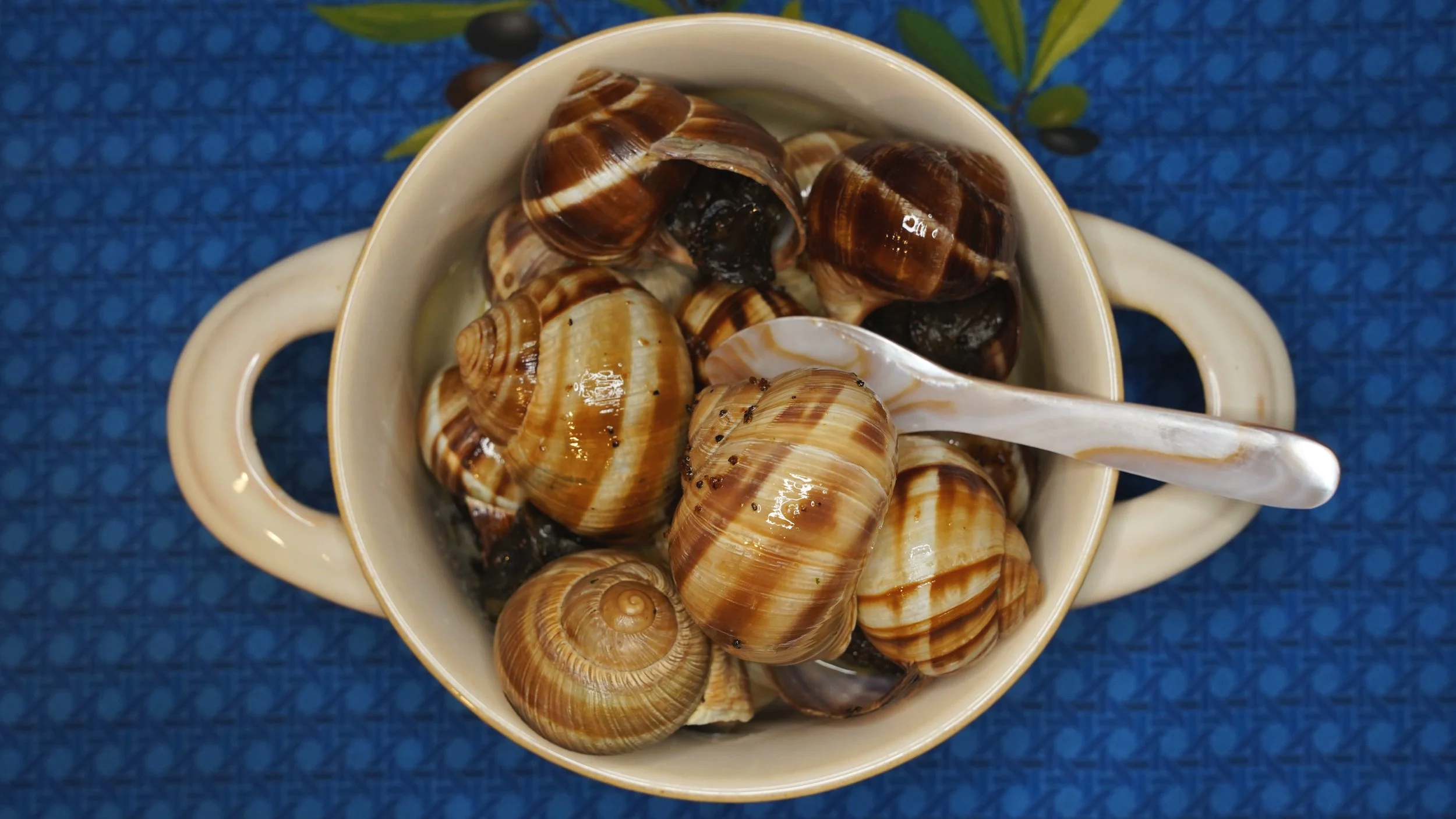
Snails cooked with asafoetida and garum
City/Region: Rome
Time Period: 1st Century
Most people in Ancient Rome didn’t have a kitchen, so eating out was the thing to do. Archaeologists have found the remains of duck, goat, fish, pork, oysters, chicken, nuts, dried meats, bread, sheep stew, and snails in these eating establishments, and it is this last one that we’re making here.
This exact recipe for snails probably wasn’t used in one of these fast food eating houses because it calls for silphium, a rather expensive ingredient that was so treasured by the ancient Romans that they ate it to extinction. In its place, we’re using asafoetida to give a kind of onion-garlic umami flavor. The flavors in the sauce for this dish are quite mild, much more so than the butter and garlic of escargot, so the kind of earthy flavor of the snails come through, accented by the asafoetida and a bit of brininess from the garum. I enjoyed them quite a bit, but if given the choice, I’d still go with modern escargot.
“Cocleas. Snails.
Fry with pure salt and oil. Baste snails with silphium, garum, pepper, oil.”
Ingredients:
- 1/4 cup (60 ml) plus 2 tablespoons (30 ml) olive oil, divided
- 1/2 teaspoon asafoetida*
- 1 1/2 teaspoons garum*
- 1 teaspoon pepper
- 1 teaspoon salt, I used a flaky sea salt
- 1-2 dozen snails, live or canned
*See notes below.
Instructions:
- In a small bowl, mix the 1/4 cup (60 ml) of olive oil with the asafoetida, garum, and pepper. This will be our basting liquid. Set it aside.
- Heat the remaining 2 tablespoons (30 ml) of olive oil and the salt in a small pan over medium heat. When the oil is hot, add in the snails. If you’re using live snails, place the open part of the shell down on the pan. If you’re using canned snails, you can just toss them in the pan. Let them cook for two minutes, then add in the basting liquid. Cook for another 4-5 minutes, stirring occasionally.
- Serve the snails forth right away.
Notes
Asafoetida, or hing, was Rome’s pungent replacement for their beloved silphium and imparts a wonderful garlicky umami flavor when cooked. Be sure to store it in a sealed container (or two) or your whole pantry will smell sulphurous. You can find it at Indian markets or at the link below.
Garum was a fermented fish sauce that was used in a lot of ancient Roman cooking. You can buy a modern equivalent or use an Asian fish sauce.
Link to asafoetida: https://amzn.to/4l52uuE
Link to garum: https://amzn.to/3ulTKKW