

Alappanu (Pomegranate Beer)
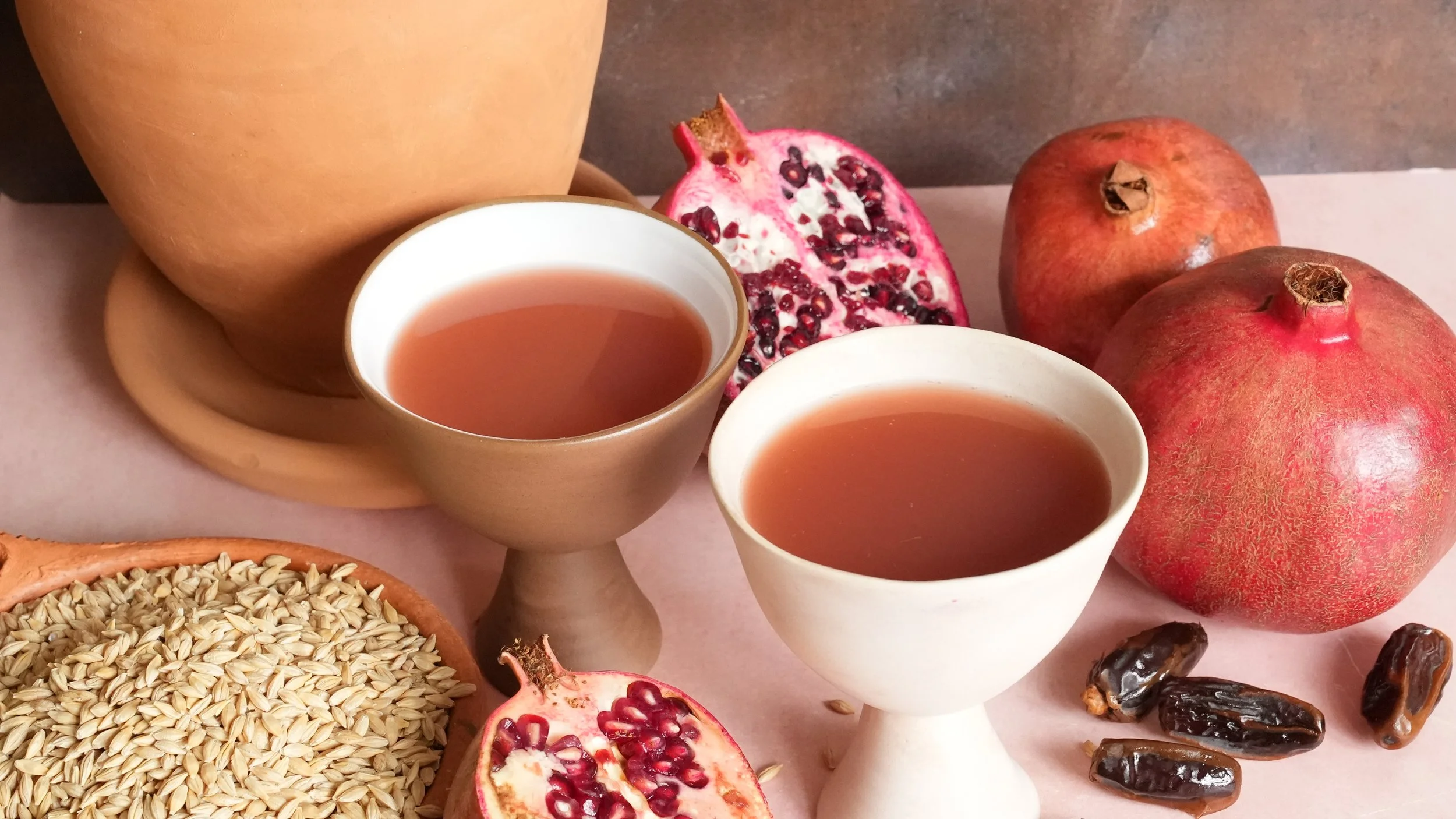
Cloudy pomegranate beer made with honey and dates
City/Region: Assyria
Time Period: 9th Century BCE
Ashurnasirpal II was an Assyrian king who built an empire in a rather ruthless manner. While he’s remembered for razing cities and killing and/or maiming their inhabitants, he’s also remembered for throwing one heck of a party. When he unveiled his new palace, he invited nearly 70,000 guests to a 10 day feast, and they even wrote down the menu. He provided 10,000 jars of beer for the feast, and while some were basic beer, there were also specialty brews like this much fancier version made with pomegranates, dates, and honey.
While flat, this cloudy beer is surprisingly tasty. The flavor of the honey and pomegranate come through, but with none of the sweetness, and they combine for an oddly modern taste.
Because there are no hops to preserve the beer, it’ll only keep for up to 1 week. As with any vague ancient recipe, feel free to change the amounts of the ingredients to suit your taste.
Ingredients:
- 2 3/4 cups (450 g) barley grains* (not pearled barley)
- 2/3 cup (120 g) emmer wheat berries
- 6 quarts (6 L) water, divided, plus more for soaking the barley
- 1 cup (175 g) pomegranate seeds
- 6 dates
- 1 1/2 cups (350 ml) pomegranate juice
- 1/2 cup (170 g) honey
- 1 teaspoon ale or wine yeast
*You can substitute malted barley and skip to step 5.
Instructions:
- To malt the barley: In a large bowl, cover the barley grains with some water, then cover the bowl with a kitchen towel, and let them soak overnight, or about 12 hours. The next day, drain off any excess liquid.
- To sprout the barley, set a cooling rack onto a baking sheet and place a layer of cheesecloth over the rack. Spread the barley evenly over the cheesecloth and cover it with another layer of cheesecloth. You want to keep air flow around the barley to help prevent the formation of mold. A couple of times a day, uncover the barley and spritz it with some water just so it doesn’t dry out.
- After about 3 days, you should see little sprouts coming up out of the barley. When you lift the barley off of the cheesecloth, there should be lots of sprouts, and this is exactly what you want. If any mold starts to form, you’ll need to toss it out and start over again.
- Set your oven to its lowest setting, usually around 200°F (93°C). Take the sprouted barley off of the cheesecloth and spread it evenly onto a baking sheet. Place the tray in the oven and let the barley slowly dry out for about 4 hours.
- To make the alappanu: Crush the malted barley into a coarse powder either using a mortar and pestle, food processor, or blender. Having some larger pieces of the grain is okay.
- Crush the emmer wheat berries in the same way as the barley.
- In a large pot, heat 5 quarts (5 L) of the water to 150°F (65°C). Stir in the crushed barley and wheat and let it infuse for 1 hour. Keep an eye on the temperature. You want it to stay between 140°F and 160°F (60°C and 71°C).
- After the grains have steeped for an hour, pour it through a strainer into another large pot. I used a large pasta pot with an insert strainer for this. You want most of the grains to be strained out.
- Add the remaining 1 quart (1 L) of water to the pot along with the pomegranate seeds and the dates. Give it all a stir and then slowly bring it to a boil, then boil for 1 hour.
- After the mixture has boiled for an hour, remove it from the heat and stir in the pomegranate juice and the honey and let it cool completely.
- Pass the mixture through a strainer into the clean and sanitized fermenting vessel of your choice. The Assyrians would have used a huge earthen jar, but I used a large glass jar so I could see it fermenting.
- Stir the yeast in until it’s dissolved. Cover it with a lid that has an airlock and let it ferment in a cool, dark place for 7 to 10 days. Foam should rise to the top and little bubbles will rise, and it’s ready when it stops making bubbles. The Assyrians covered their fermenting vessels with straw, but I recommend using a modern lid with an airlock.
- Ladle it into the drinking vessel of your choice, and serve it forth. The beer will keep for no longer than 1 week.