

Roman Pork in Wine Sauce with Farro Puls
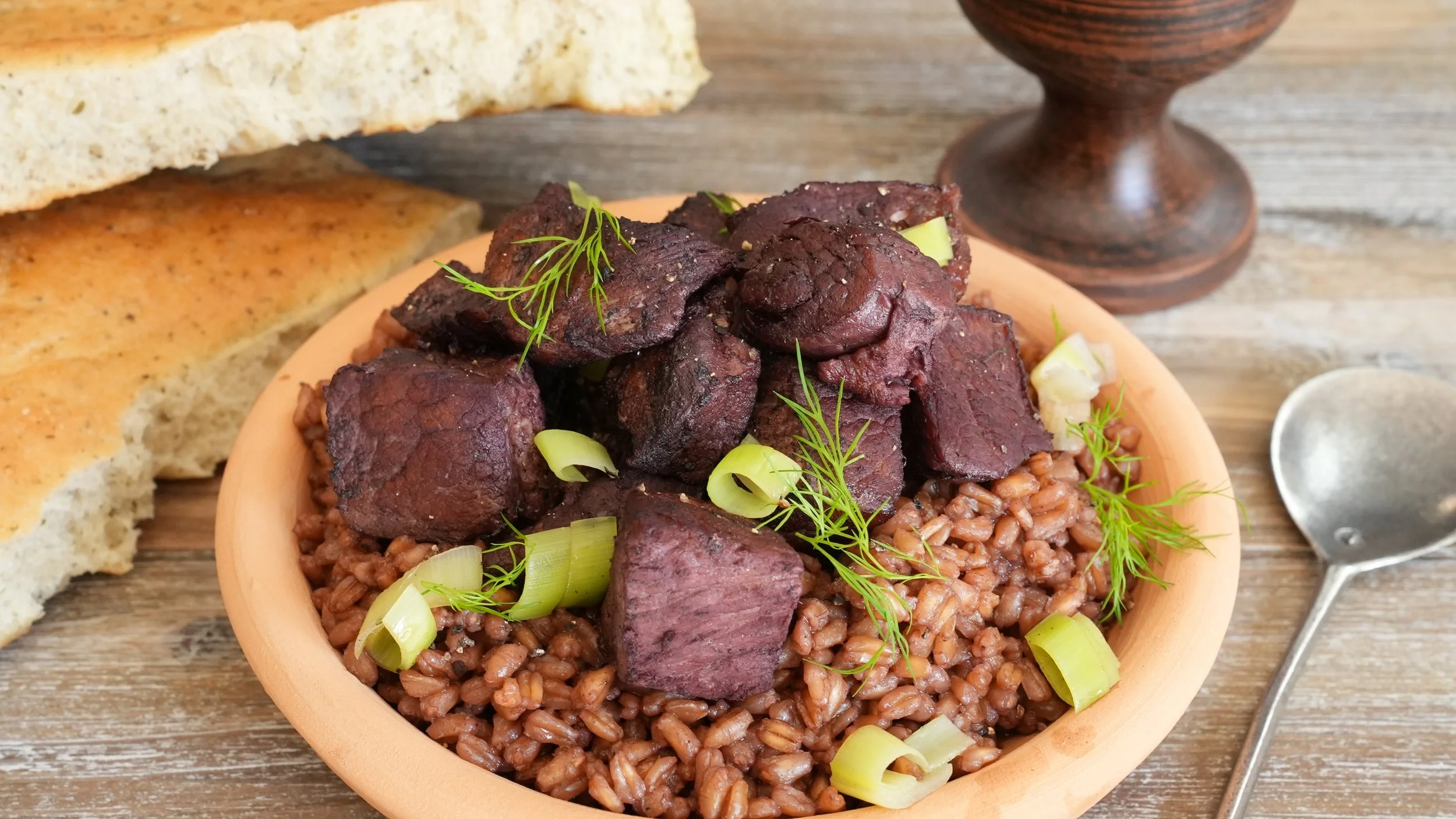
Farro cooked in wine sauce topped with stewed pork, leeks, and dill
City/Region: Rome
Time Period: 1st Century
While the common Roman foot soldier didn’t often have access to fresh meat, a Roman centurion did. A centurion was in charge of 80 fighting men and 20 servants, and holding such a rank meant that their meals were prepared for them and might include ingredients like garum, defrutum (reduced grape must), and fresh herbs and meat.
The dill and defrutum come through in the pork, and the wine isn’t overpowering. The puls, or wheat porridge, is wonderfully flavorful, and the whole dish is made up of lots of different textures (don’t skip the chopped leek garnish; it adds a wonderful crunch). If you like your puls to be thicker and more porridge-like in consistency, go ahead and crush the farro before cooking it.
“...small pieces of meat and fine wheat flour or cooked groats you also season with [oenococti], and serve with small morsels of pork prepared with the same sauce.”
“Frontinian Piglet [oenococti sauce]:
You bone it, brown, and truss. Put into a pot garum and wine., and tie together a bundle of leek and dill. Halfway through the cooking, add defrutum. When it is cooked, wash it and dry. Sprinkle with pepper and serve.”
Ingredients:
- 2 cups (475 ml) water
- 1 cup (200 g) farro or other whole wheat berries
- 1-2 tablespoons olive oil
- 2 lbs (1 kg) pork, cut into bite-sized pieces
- 2 cups (475 ml) wine, you can use either red or white, but I used red
- 1 tablespoon garum* or 1 tsp salt
- 1 small leek
- A small bunch dill, tied into a bundle with kitchen twine, plus more for garnish if desired
- 3 tablespoons defrutum*
- 1 large pinch black pepper
*See notes below.
Instructions:
- You can lightly crush the farro if you want a thicker puls, or leave it whole. Combine the water and farro in a saucepan and bring it to a boil over medium-high heat. Reduce the heat and simmer for 15 minutes.
- While the farro cooks, heat the olive oil in a pan over medium-high heat, then cook the pork just to brown it on the outside. Remove the pork from the pan and set aside.
- Add the wine and garum or salt to the pan and be sure to scrape up any browned bits from the bottom of the pan. Bring it to a simmer, then add the pork back in. Cut the leek so that the white part is separate from the green part, but otherwise leave it whole. Add the white part of the leek and the dill, then simmer for 4 to 5 minutes.
- Stir in the defrutum and cook for another 5 minutes, or until the pork is cooked through.
- When the pork is done, remove it from the pan. Take about 3/4 cup (175 ml) of the wine sauce and stir it into the farro. Cook the farro for another 15 minutes, or until it’s nice and soft.
- Chop the cooked leek for garnish. When the farro is done, dish it up and top it with the pork, then garnish with black pepper, chopped leek, and fresh dill, and serve it forth.
Notes
- Garum was a fermented fish sauce that was used in a lot of ancient Roman cooking. You can buy a modern equivalent or use an Asian fish sauce.
- Defrutum was a 1/3 reduction of grape must and is sweet and delicious. Today saba is pretty much the same thing. It can be expensive, so you can reduce some grape juice instead. It won't be as complex as saba, but it will work just fine.
- Link for garum: https://amzn.to/3ulTKKW
- Link for defrutum: https://amzn.to/3JGkbyK
Some links on this site are affiliate links. If you buy something through them, it does not cost you anything more, but we will get a small commission which helps keep the site up and running. Thanks!