

English Toffee
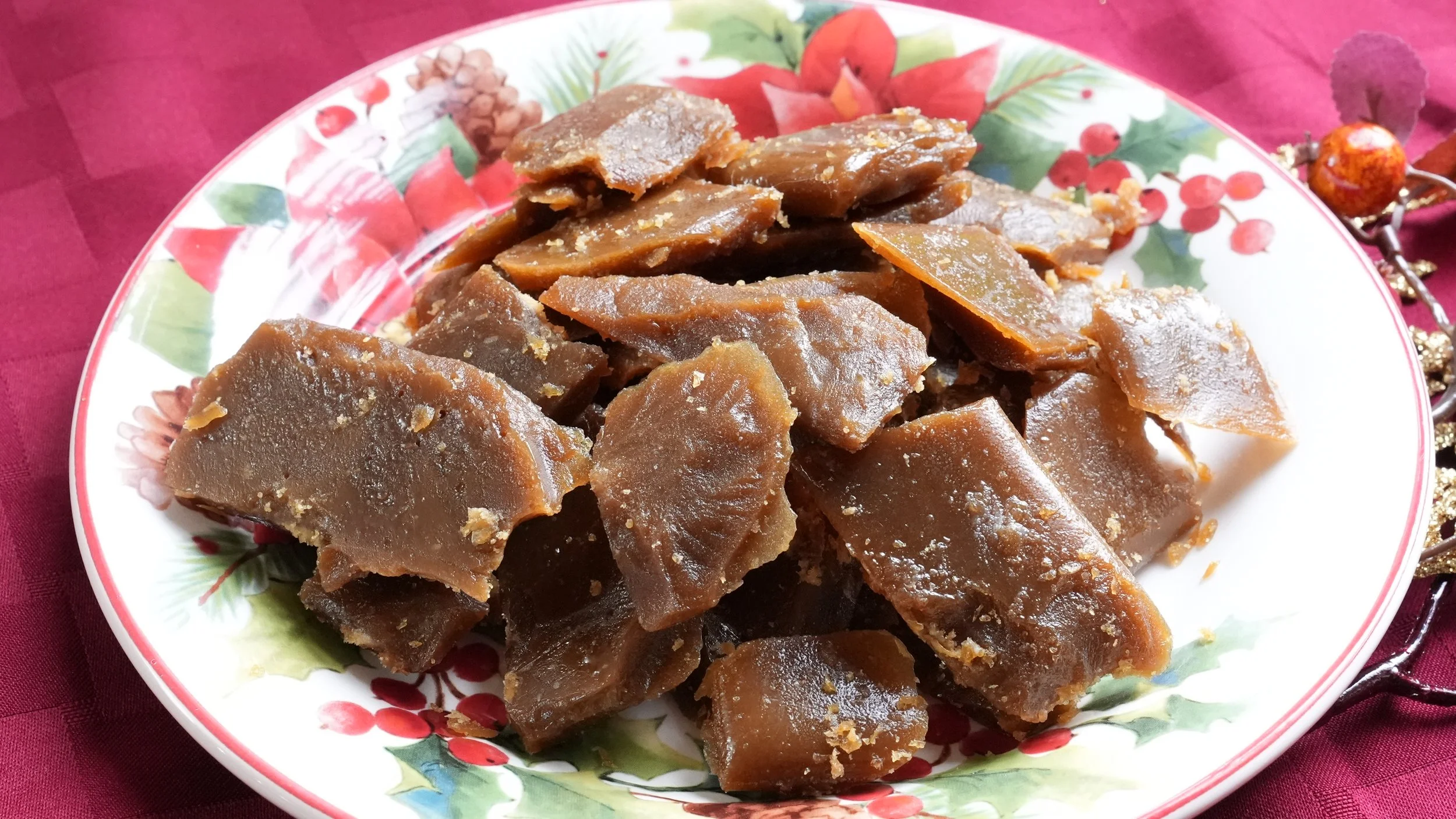
Rich, sweet pieces of Victorian Era toffee
City/Region: Everton, England
Time Period: 1881
Around Christmas, my house is full of candy and baked goods, and for me, toffee is one of the quintessential Christmas treats. Possibly invented by Molly Bushell in 1753 in Everton, just outside of Liverpool, toffee can be hard like the recipe we’re making here or of a softer, chewier variety.
While either option is delicious, this recipe is specifically for the hard style of Everton toffee. It’s a really simple recipe (the hardest part is waiting for it to come up to temperature), and is such a rich, decadent treat. The lemon extract adds a layer of acidic complexity to the toffee, but it doesn’t taste of lemon.
Feel free to dress yours up by adding some nuts to the dish before you pour the toffee over it, or sprinkle some chocolate chips over the toffee while it’s still hot so that they melt.
“Everton Toffee.
Put one pound of brown sugar and one tea-cupful of cold water into a pan well rubbed with good fresh butter. Set it over a slow fire, and boil until the sugar has become a smooth, thick syrup, then stir into it half a pound of butter, and boil for half an hour. When sufficiently boiled, it may be tested by dropping some on a plate, and if it dries hard and can easily be removed, the toffee is ready for flavouring. For this purpose, add twenty or thirty drops of essence of lemon. Pour the toffee into a wide well-buttered dish. If liked, vinegar may be substituted for the water, then the lemon may be omitted.”
Ingredients:
- 2 1/4 cups (450 g) light brown sugar
- 3/4 cup (175 ml) water
- 1 cup (225 g) salted butter, cut into pieces, plus more for buttering the pan
- A pinch of cream of tartar, optional
- 1/4 to 1/2 teaspoon lemon extract
Instructions:
- Prepare a 9x13 inch (23x33 cm) heatproof dish. You can either follow the historical recipe to the letter and just butter the dish well, but you’ll have an easier time getting the toffee out of the pan if you butter it and line it with parchment paper.
- Butter the inside of a large saucepan. Honestly, I’m not sure if this really does anything, but it’s in the historical recipe. I’m pretty sure you can skip this without anything terrible happening.
- Stir together the brown sugar and water in the pan, then put the pan over low heat and stir. The sugar should dissolve to make a syrup in about 5 to 8 minutes, and as soon as it starts to steam, add in the butter. Stir to help the butter melt. At this point, you can stir in a bit of cream of tartar to help prevent crystallization. Some professional recipes from the time included this, but this particular recipe didn’t. Once the butter has melted, stop stirring and put a candy thermometer on the pot.
- Keep the heat low while the candy heats. Once it hits around 220°F (105°C), it will slow or even stop rising in temperature, but keep it on low heat, and it will start to rise again. This can take about 30 minutes. You want the temperature to reach 300-310°F (150°C), or the hard crack stage.
- Take the pot off the heat and stir in the lemon extract, then pour the toffee into the prepared pan. Let the toffee cool and set up, about 10 minutes.
- When the toffee has set up, take it out of the pan and break it up into pieces, then serve it forth.