

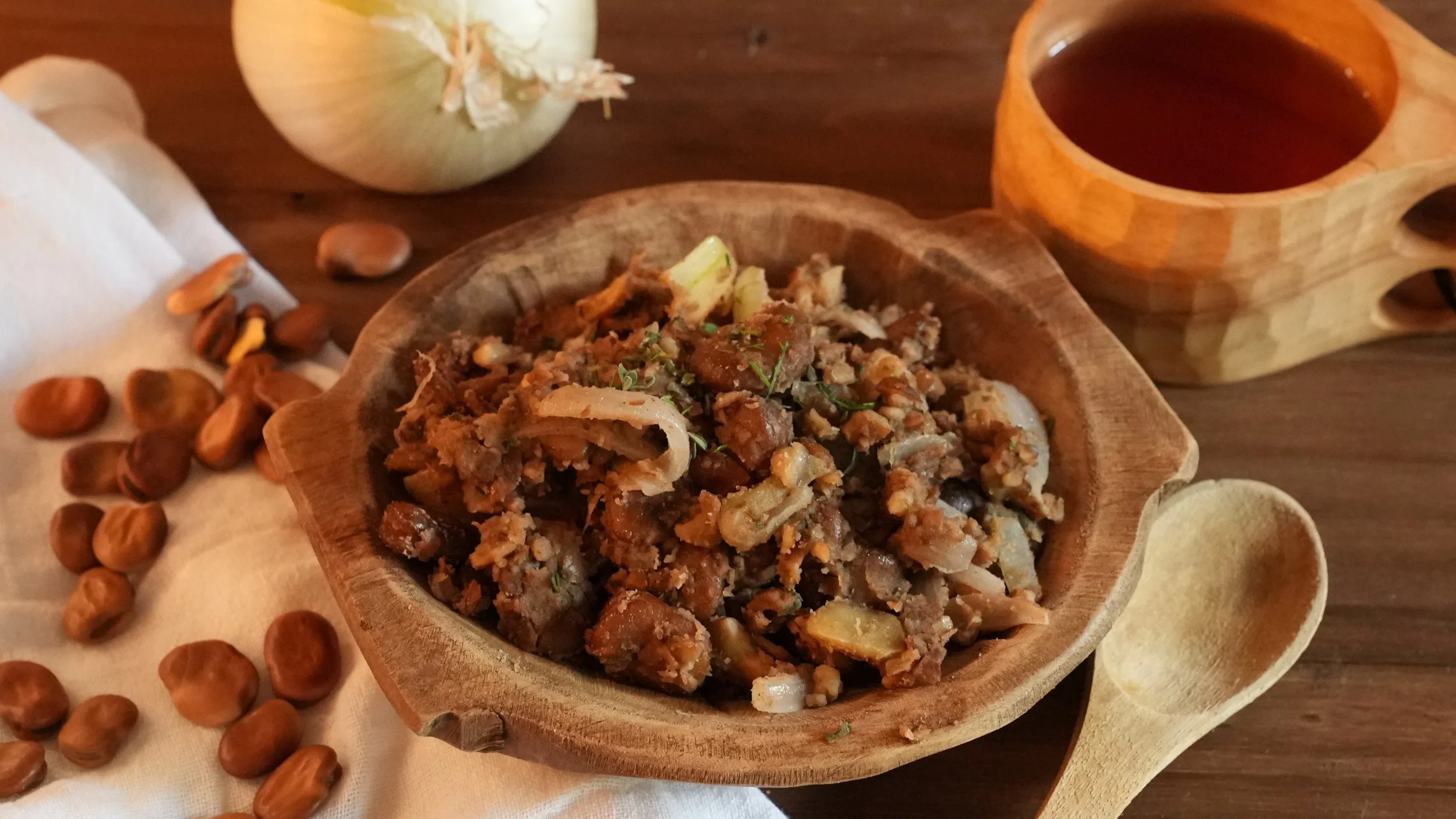
Fava beans fried with onions, garlic, and herbs
City/Region: England
Time Period: c. 1390
A hermit was a monk or holy person who decided to remove themselves from society in order to live a solitary life of quiet contemplation, and this included the most basic of diets so that they wouldn’t get any pleasure out of eating. This could be just one or a combination of things like scraps of barley bread with muddy water, uncooked lentils, beans, and wild herbs and roots.
This recipe was originally from the kitchens of King Richard II, so it includes poudre douce, which is a mixture of sweet spices. No hermit worth his salt would ever eat spices, so I’m replacing them with more appropriate common herbs.
As intended, this dish is very simple. It’s not bad, but it doesn’t exactly leave you wanting more, which would have been perfect for a monk trying to stick to their diet.
“Benes yfryed
Take benes and seeth hem almost til they bersten. Take and wryng out the water clene. Do thereto oynouns ysode and ymynced, and garlec therewith; frye them in oile other in grece, & do thereto powdour douce, & serue it forth.”
Ingredients:
- 1 lb (450 g) dried fava beans
- 1 small onion, sliced
- 1 to 2 garlic cloves, minced
- 3 to 4 tablespoons olive oil
- 1 teaspoon poudre douce*, or 2 tablespoons fresh herbs**
*See Notes below.
**I used marjoram, dill, and sage.
Instructions:
- Place the beans in large pot and cover them with plenty of water. Bring it to a boil, then let them boil for 2 minutes. After 2 minutes, turn off the heat, cover with a lid, and leave them to soak for at least 8 hours, preferably overnight.
- After the beans have soaked, drain them and rinse them. Return the beans to the pot with fresh water, then bring it back to a boil. Boil the beans for 1 to 2 hours, or until they begin to burst. Drain and rinse the beans again, then remove the skins (you can leave the skins on if you want, but they can be tough and a little bitter).
- Mix the beans with the onion and garlic, then heat the oil in a large pan over medium-high heat. Add the bean mixture, then fry them for about 10 minutes, stirring constantly so that nothing burns. Add some more oil if anything starts to burn or it looks like it’s getting too dry.
- After 10 minutes, or when the onions have become nice and tender, turn down the heat and stir in the poudre douce or herbs. Cook for another 3 to 4 minutes.
- Serve the beans forth.
Notes
Poudre douce was a mixture of sweet spices, which were very expensive in medieval Europe. This recipe includes them because it comes from the kitchens of King Richard II, so use herbs for a more hermit-appropriate option.
If you do want to use poudre douce for more interesting beans, use a combination of sugar and warm, sweet spices like nutmeg, ginger, cinnamon, and grains of paradise or other pepper. Each medieval cook had their own version of poudre douce, and now you have one, too.