

Medieval English Lasagna
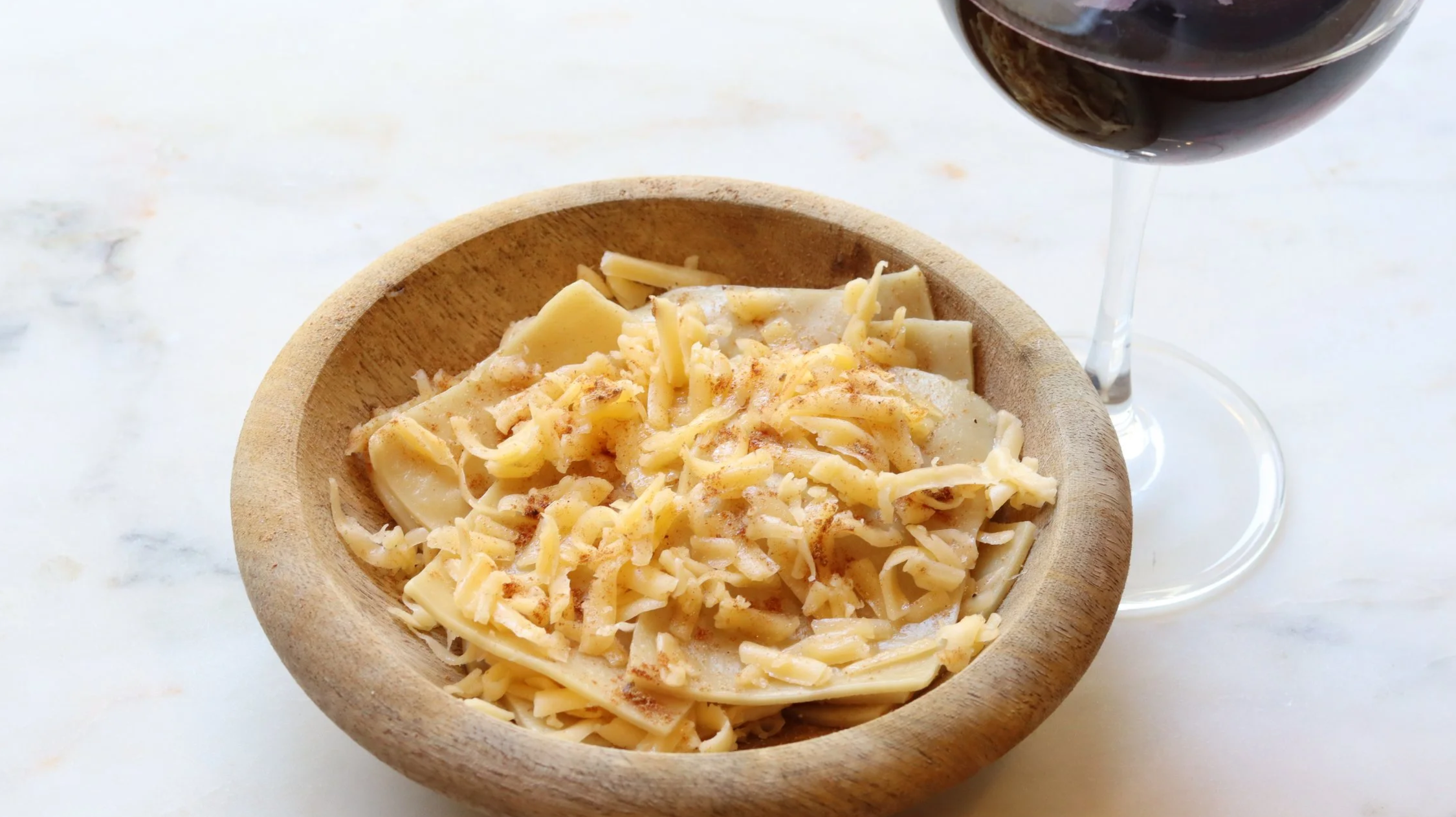
Layers of homemade pasta with grated gouda and poudre douce
City/Region: England
Time Period: c. 1390
This recipe from 1390 England obviously doesn’t have the tomato sauce and copious amounts of cheese that many of us associate with lasagna today. Instead, it’s a simple dish of pasta, grated cheese, and a sweet medieval spice blend called poudre douce. Simple as it may be, it would not have been a cheap dish in the Middle Ages. The spices and sugar in the poudre douce would have only been available to the wealthy, hence its place in a cookbook from the kitchens of King Richard II.
To me, this is more like a mac and cheese than a lasagne. It’s as if you took a boxed mac and cheese and sprinkled some cinnamon over it. It’s not bad by any means, but it’s more of a novelty than the centerpiece of your next dinner party.
“Loseyns
Take good broth and cook in an earthen pot. Take fine white flour and make thereof paste with water. And make thereof foils thin as paper with a roller, dry it hard and boil it in broth. Take Ruayn Cheese, grated, and lay it in a dish with Powder Douce. And lay thereon the foils large and many as thou might. And above powder and cheese, and so twice or thrice, & serve it forth.”
Ingredients:
Poudre Douce
- 1 tablespoon sugar
- 2 teaspoons ground ginger
- 2 teaspoons cinnamon
- 1 teaspoon ground nutmeg
- 1/2 teaspoon ground grains of paradise*, or other pepper
Lasagna
- 2 cups (240 g) bread flour
- 1/2 cup (120 ml) water
- 1 1/2 quarts (1.5 L) beef or chicken stock
- 2 teaspoons salt, if stock is unsalted
- 8 oz (225 g) grated semi-soft cheese, more or less as desired, I used gouda
*See Notes below.
Instructions:
- For the poudre douce: Mix the spices and sugar together and transfer to a storage container. Now you have poudre douce for all your medieval cooking needs.
- For the lasagna: Pour the flour out onto a clean work surface and make a well in the center. Add the water a little at a time, working it into the flour as you go. This is going to be more like an unleavened bread dough than a modern pasta dough. Work the dough with your hands until it’s all combined, then knead the dough for 15 minutes by hand, or 8 minutes in a stand mixer. Cover it and let it rest for 20 minutes.
- After the dough has rested, it’s time to roll it out. Divide the dough up into halves or thirds depending on how much space you have to work with. You can use a pasta roller to roll the dough out, but I did mine with a rolling pin. With a rolling pin, you want to roll them out as thin as you can; once you think you’ve rolled it out enough, keep rolling.
- Once the dough is rolled out, cut it into whatever shape and size you want. I went with the suggestion of a 14th century cookbook and cut them into squares three fingers wide.
- Lay the pieces of dough out on parchment paper and let them dry out for at least 1 hour, but ideally a full day.
- When the pasta has dried, heat the stock and salt (if your stock is unsalted) in a pot over high heat until it comes to a rolling boil. Gently add the pasta and boil for 8 to 12 minutes. The time will depend on how thin you rolled the pasta and how you like your pasta cooked.
- When the pasta is cooked to your liking, drain it. While the pasta is still hot, place a layer of pasta in a bowl or serving dish, then sprinkle on a layer of cheese and a bit of the poudre douce. Repeat two or three times, or until you’ve used up your pasta. The amount of cheese and poudre douce that you use in each layer is up to you. You should have poudre douce leftover for other medieval recipes.
- Serve it forth. For extra authenticity, eschew forks and use a skewer or single chopstick to eat it.
Notes
Grains of paradise have a complex flavor that is peppery with hints of citrus, ginger, and cardamom.
Link to grains of paradise: https://www.amazon.com/dp/B0C45BPBNX