

Panis Quadratus
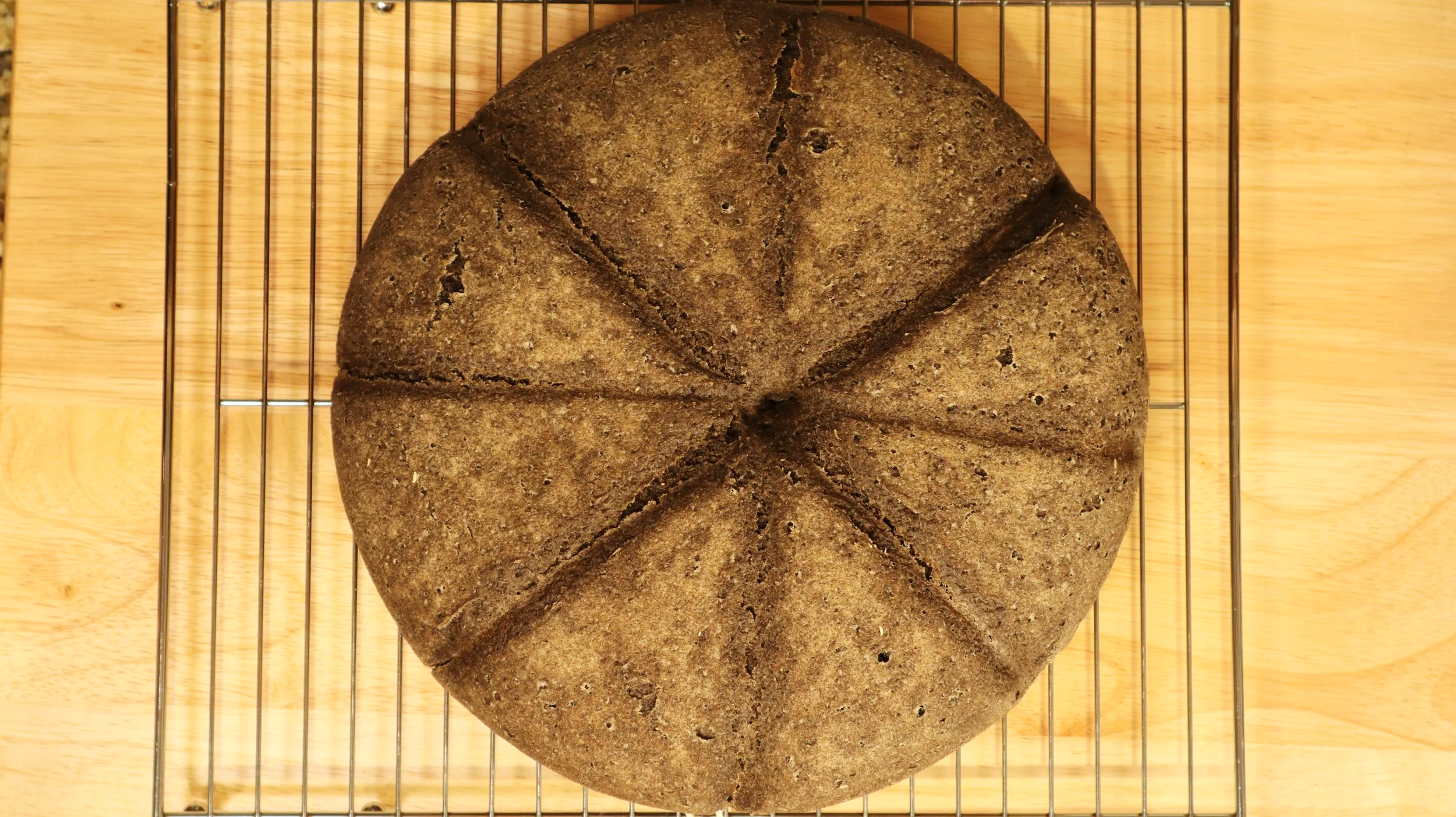
Dark loaf of bread in the iconic round shape found in Pompeii
City/Region: Rome
Time Period: 1st Century
The ash from the eruption of Mount Vesuvius preserved Pompeii and Herculaneum wonderfully, including their bakeries. Not only are the bakeries intact, but so are loaves of bread from the day of the eruption. Basing my recipe off of London chef Giorgio Locatelli’s, created for the British Museum, this loaf uses the writings of Pliny the Elder to come up with possible flour and leavening agents.
This bread, while the herbs give it more flavor than previous (more photogenic) attempts I made, is just okay. It’s quite dense, and if you use the same flours I did, it comes out quite dark, almost identical to its carbonized ancestor from Pompeii.
Weight is a better measurement here as the same volume of different flours don’t necessarily weigh the same.
Ingredients:
- 3 teaspoons salt
- 400-500 ml lukewarm water
- 1 kg flour*, I used half buckwheat and half whole wheat
- 1/2 teaspoon ground fennel**
- 1 teaspoon dried hyssop**
- 250 g biga or freshly fed sourdough starter
*You can use any combination of whole wheat, buckwheat, barley, spelt, and rice that you like. The amount of water you need and the texture of the bread may be different from mine.
**Use whatever herbs you like.
Instructions:
- Stir the salt into the water to dissolve it.
- Mix the herbs into the flour until evenly combined.
- Dump the flour out onto a flat work surface and make a well in the center as if you were making pasta. Add the sourdough starter into the well. Start to work the flour into the sourdough starter, adding the salt water a little at a time. You may not need all of the water. Keep working it and adding water just until the dough comes together.
- Once the dough comes together, knead it by hand for about 15 minutes or until it’s nice and smooth. This dough is a lot for a stand mixer to handle, so I suggest kneading by hand. When the dough is smooth, place it in a bowl, cover it, and set it to rise for about 1 1/2 to 2 hours, or until it’s doubled in size.
- Preheat the oven to 400°F (205°C).
- Turn the dough out onto a lightly floured surface and gently knock out the air. Form the dough into a round and place it on a baking sheet or bread cloche. Pat the dough down into a flat loaf, then cover and let it rise for about 20 minutes.
- After the dough has had its second rise, take a piece of kitchen twine and wrap it around the circumference of the loaf halfway up the sides. Cinch it a bit, then tie it off. Use another piece of twine to make deep lines on the top of the loaf, dividing into 8 equal sections like a pie. You want to make a deep enough line so that it will hold the shape, but you’re not trying to cut through the dough. Use a finger to make a deep impression in the center of the loaf where all the lines cross.
- Bake for 40 to 45 minutes. If you’re using a cloche, remove the lid about 30 minutes into baking.
- When the loaf is done (registering 205°F/96°C on an instant thermometer), set it on a cooling rack to cool before slicing and serving it forth.