

Potted Meat
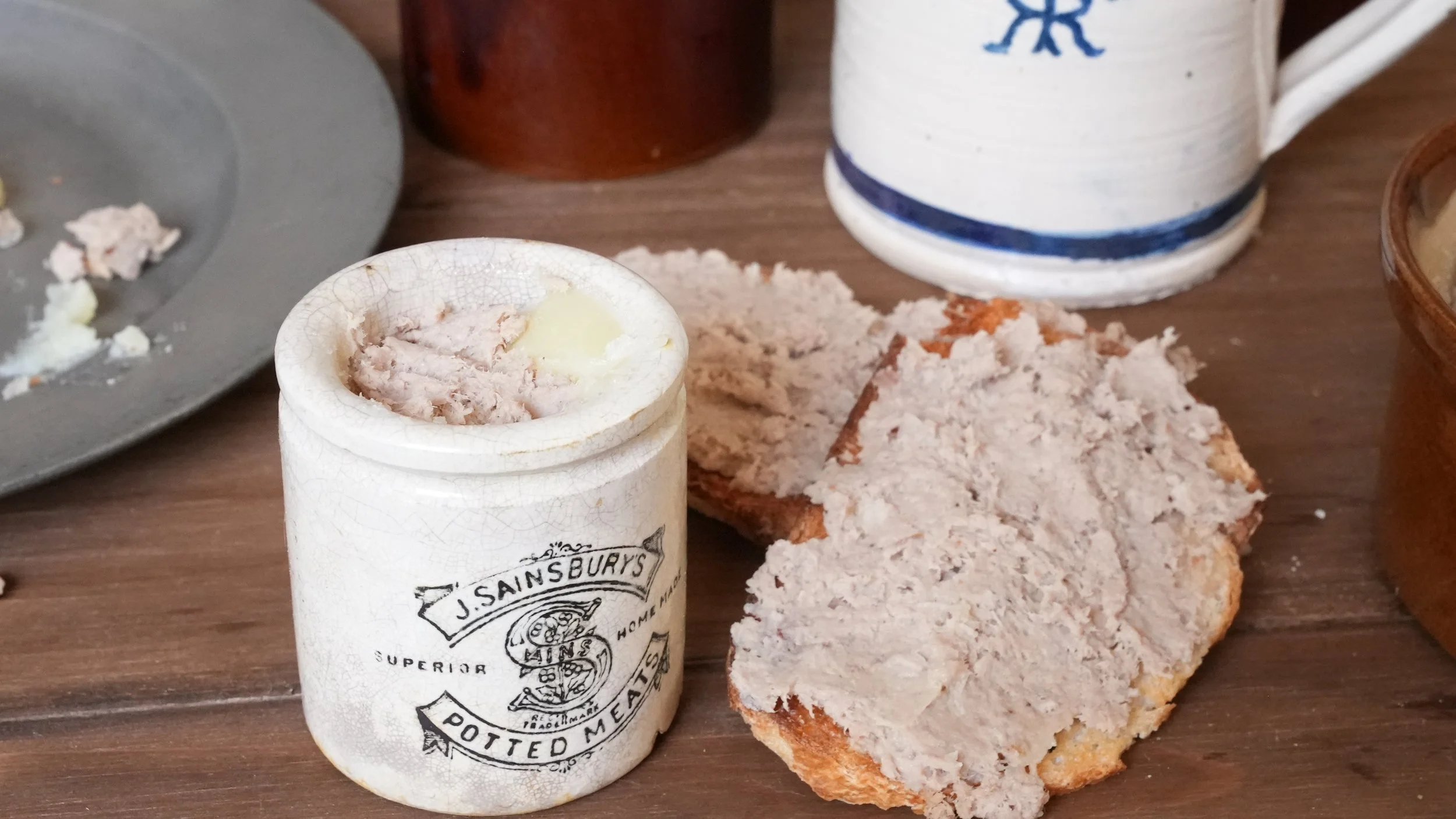
Potted beef topped with clarified butter and spread on toast
City/Region: England
Time Period: 1747
For short-term preservation, cooked meat was often potted: pounded to a paste, mixed with spices, packed into a container, and covered with fat. This was kept in a cool place for up to a few weeks, but was often eaten the next day. People potted meat, game, fish, shellfish, cheese, and even mushrooms.
This is really good. It’s essentially roast beef with some spices and butter. What’s not to like? The texture is pȃté-like, but not as smooth, though it spreads easily on some bread.
“To pot Venison.
Take a piece of venison, fat and lean together, lay it in a dish, and stick pieces of butter all over; tie a brown paper over it, and bake it. When it comes out of the oven, take it out of the liquor hot, drain it, and lay it in a dish; when cold, take off all the skin, and beat it in a marble mortar, fat and lean together, season it with mace, cloves, nutmeg, black pepper and salt to your mind. When the butter is cold that it was baked in, take a little of it, and beat in with it to moisten it; then put it down close, and cover it with clarified butter. You must be sure to beat it, till it is like a paste. ”
Ingredients:
- 3 lbs (1.3 kg) beef bottom round roast, or venison that has some fat in it
- 1/2 cup (115 g) butter, cut into slices
- 2 teaspoons salt
- 1/2 teaspoon pepper
- 1/2 teaspoon nutmeg
- 1/4 teaspoon mace
- 1/8 teaspoon cloves
- 1 cup (225 g) clarified butter* or ghee, melted
See Notes below.
Instructions:
- Preheat the oven to 300°F (150°C).
- Set the meat in a ceramic baking dish, then cover it with the slices of butter. If your baking dish has a lid, cover it with that. If it doesn’t, then cover it with a piece of parchment paper and secure it with some kitchen twine tied around.
- Roast for 3 to 4 hours, or until the meat is 135-140°F (57-60°C). You can use a slow cooker instead; set it on low for 5 to 6 hours.
- When the meat is done, take it out of the baking dish and set it aside to cool completely. Pour the drippings through a strainer and save the liquid.
- Once the meat is cool, mince it as finely as possible. If you have a food processor, now’s the time to use it.
- Working in batches, put the minced meat into a mortar and beat it until it’s as paste-like as you can get it.
- Once all the meat has been beaten up, place it in a large bowl and mix in the salt and pepper. Once those are evenly incorporated, mix in the nutmeg, mace, and cloves. Taste and add in more spices if you like.
- Add the drippings a little at a time, stirring them in until you get a paste that’s about the texture of tuna salad. I used about 80% of the drippings that I got from my piece of beef.
- Pack the beef into jars, crocks, ramekins, or bowls. These were often made of ceramic. Leave about 1/2 inch (1.25 cm) at the top of the jars. You want to pack the beef mixture in tightly so that as little air is in it as possible (air pockets increase the likelihood of spoiling).
- Pour the melted clarified butter or ghee over the meat so that it’s covered completely, then put them in the fridge to solidify.
- When the clarified butter has solidified, you can leave them as-is or cover them with a lid, piece of parchment secured with string, foil, or plastic wrap.
- To serve it forth, pry off the hardened clarified butter and spread the potted meat over some bread or toast.
Notes
To make your own clarified butter, melt 2 cups (456 g) butter in a wide pan on the lowest heat you can. Cook it on low, skimming off the foam and milk solids. You’re looking for the butter to stop bubbling, which is an indicator that the water has been cooked off. When it stops bubbling, pour it through some cheesecloth to get rid of any remaining milk solids. Reserve around 1 cup (225 g) for this recipe, and keep the rest in the fridge for cooking or frying.