

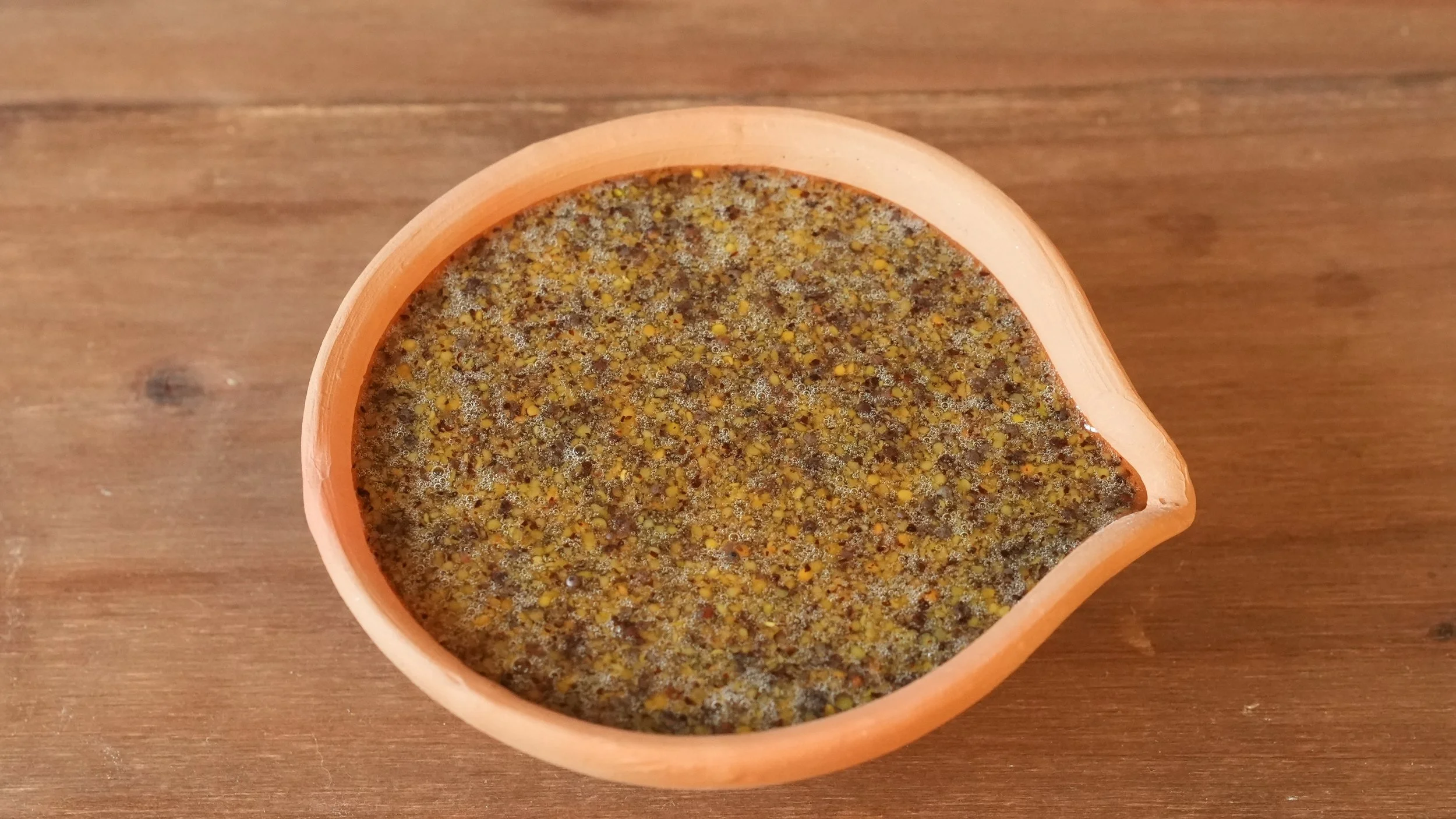
Mustard prepared with honey, vinegar, and olive oil
City/Region: Rome
Time Period: 4th Century
Mustard is as old as civilization itself. By 3,000 B.C.E., it was being cultivated in India, and it could be found growing wild from North Africa to the Himalayas. Its leaves, or mustard greens, was used for food, and the seeds were used as medicine. Pliny the Elder in Rome lists the many ailments that mustard seeds were believed to cure, from snake bites to poisonous mushrooms to phlegm to toothaches.
This mustard uses more honey than mustard seeds, and it’s absolutely delicious. You get the flavor of the mustard, but none of the heat. The honey is the dominant flavor, but its sweetness is nicely balanced by the mustard. I would definitely make this again.
“Take mustard seed in the amount of one and a half sextarii and grind it into a powder. To this add five pounds of honey, one pound of Spanish olive oil, and one sextarius of sharp vinegar. Grind everything together thoroughly, and use.”
Ingredients:
- 1/4 cup (50 g) black mustard seeds
- 1/3 cup (115 g) honey
- 2 tablespoons olive oil
- 2 tablespoons plus 2 teaspoons wine vinegar, white or red
Instructions:
- Grind the mustard seeds in a mortar until it’s the texture you like. A fine powder will make for a smoother mustard.
- Stir in the honey until fully incorporated, then stir in the olive oil until it’s fully incorporated, and finally stir in the vinegar until it’s fully incorporated.
- The oil and vinegar will separate after a couple of minutes, so be sure to give it another stir before you serve it forth.