

William the Conqueror’s Hippocras
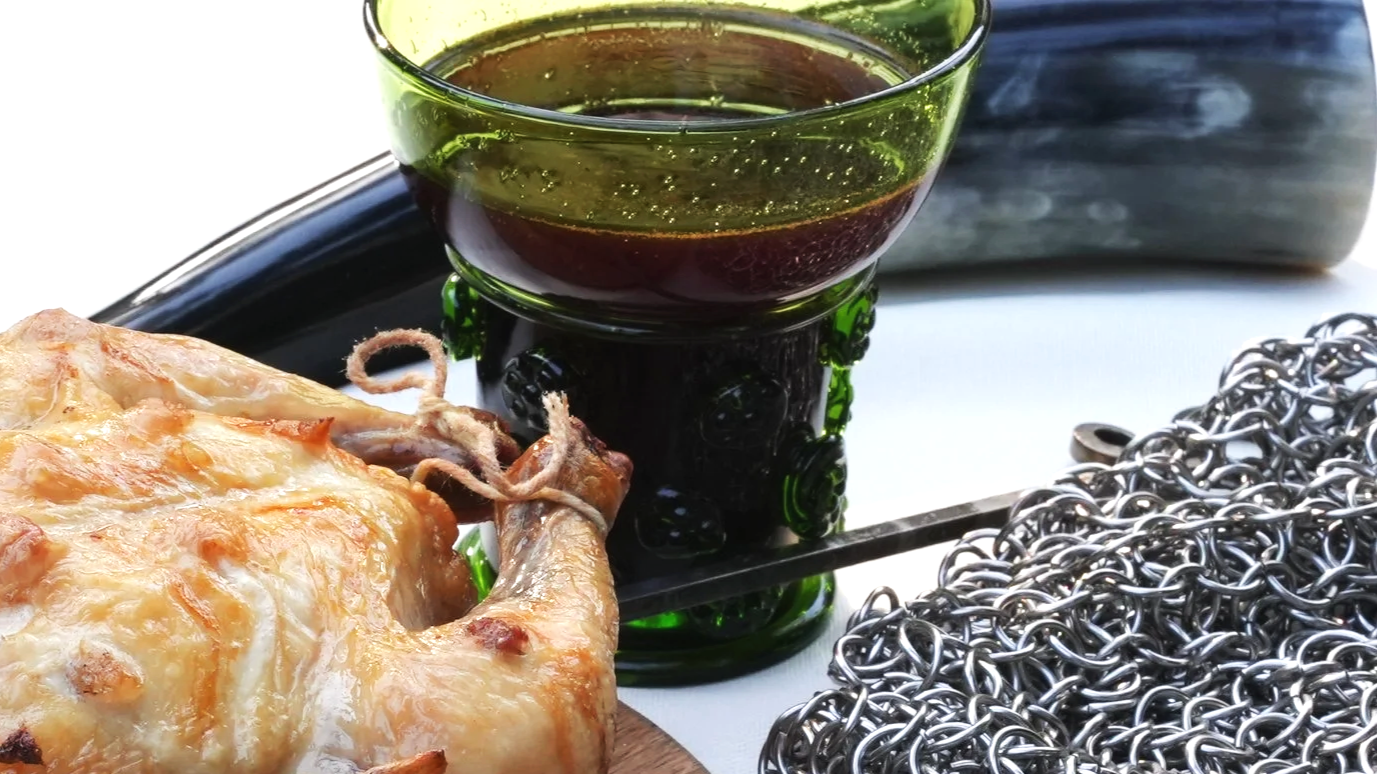
Spiced sweetened wine served with William the Conqueror’s Hens with Cameline Sauce
City/Region: France
Time Period: c. 1300
The chronicler William of Poitiers wrote that, after landing in England, William the Conqueror “partook of an abundant meal, accompanied by spiced wine”, so that’s what we’re making to accompany William the Conqueror’s Game Hens with Cameline Sauce. I’ve made medieval hippocras before from the English cookbook The Forme of Cury, but since William is from France, I’m using the first medieval French cookbook Le Viandier de Taillevent.
Warm spices, sugar, and wine, what’s not to like? This hippocras is delicious with flavors that would be perfect for the holidays. Use whatever kind of wine you like best; medieval hippocras was made with red, white, and rosé.
“Hippocras.
Take four ounces of very fine cinnamon, two ounces of fine cassia flowers, an ounce of choice Mecca ginger, an ounce of grains of paradise, and a sixth of nutmeg and galangal combined. Crush them all together. Take a good half ounce of this powder and eight ounces of sugar, which thus makes Sweet Powder, and mix it with a quart of wine. ”
Ingredients:
- 2 cups (475 ml) wine, whatever you like
- 1 1/2 teaspoons cinnamon
- 3/4 teaspoon ground ginger
- 1/4 teaspoon grains of paradise*
- Pinch nutmeg
- Pinch dried galangal*
- 1/2 cup (100 g) sugar
*See notes below.
Instructions:
- Grind any spices that are not already ground.
- Mix everything together, then cover it and let it sit for at least 1 hour or up to 24 hours.
- After the hippocras has steeped, strain it through a few layers of cheesecloth or, if you have it, a hippocratic sleeve.
- Serve the hippocras forth at whatever temperature you prefer along with William the Conqueror’s Hens with Cameline Sauce.
Notes
Grains of paradise have a complex flavor that is peppery with hints of citrus, ginger, and cardamom.
Galangal is related to ginger, but has a sharp citrusy, piney flavor. It's used in a lot of Southeastern Asian cuisines like Thai and Vietnamese, and in historical recipes like this one.
Link to grains of paradise: https://amzn.to/3V4OPaW
Link to galangal: https://www.amazon.com/dp/B07G2WL7BZ
Some links on this site are affiliate links. If you buy something through them, it does not cost you anything more, but we will get a small commission which helps keep the site up and running. Thanks!