

Cockentrice
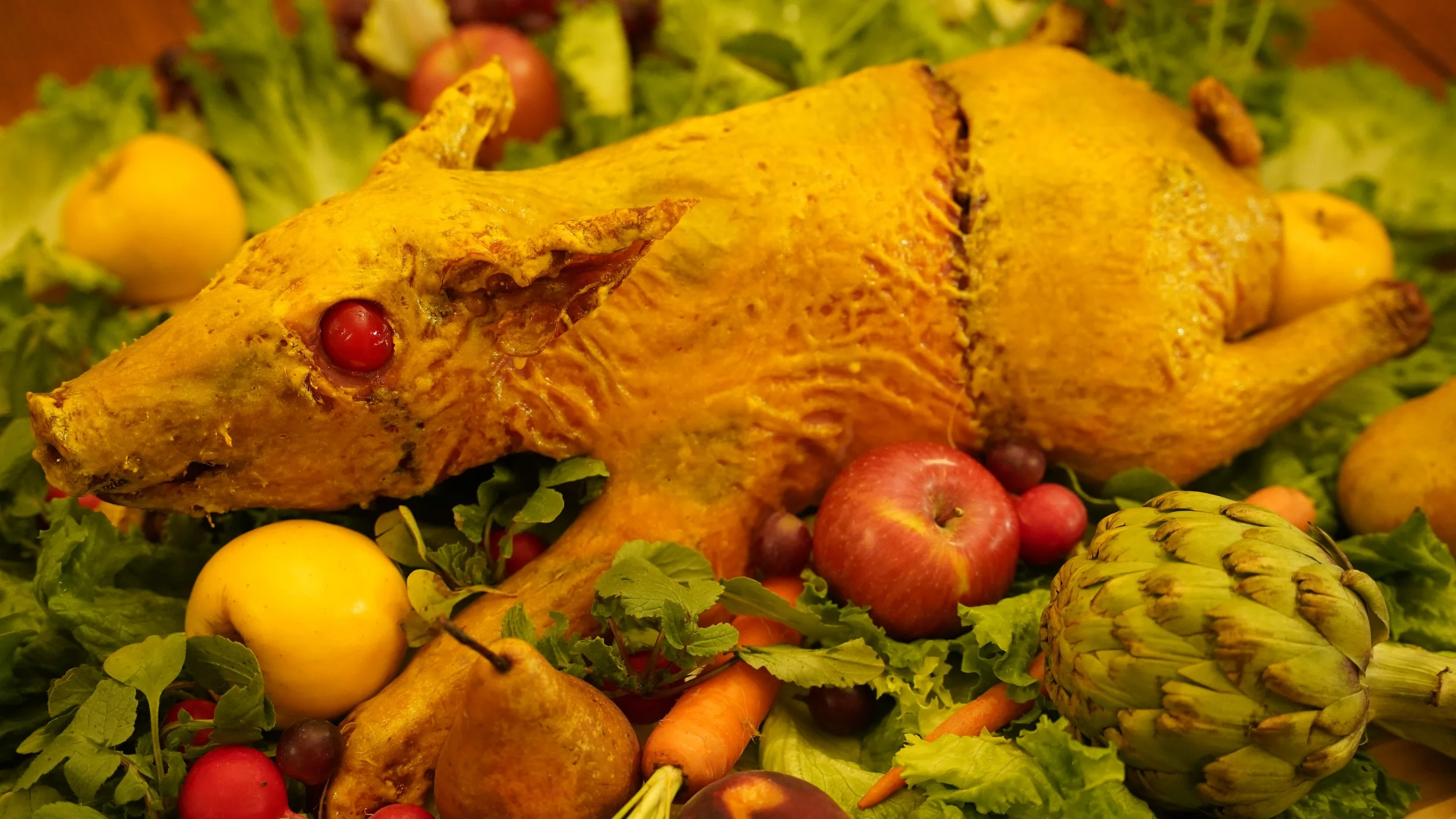
The front half of a suckling pig sewn onto the back half of a capon, covered in a golden coating
City/Region: England
Time Period: 15th Century
In the Middle Ages, wealthy people loved to serve dishes that were less for eating and more for the spectacle. There were pies with live birds inside, re-feathered peacocks, whole dolphins, huge sugar sculptures, and a helmeted chicken riding astride a roasted pig. This dish is one of those: the front half of a suckling pig sewn onto the back half of a capon (a castrated rooster), colored gold.
Really, you shouldn’t go to the trouble of making this, but if you do, use a small turkey instead of a capon. The flavor of a capon is gamier than a regular chicken, and it’s good, but capons are ridiculously expensive. A lot of the saffron flavor comes through from the golden coating and the stuffing, and the stuffing is actually my favorite part.
“Cockentrice
Scald a capon clean, and cut him in two at the waist, and scald a pig, and drain him, and cut him in the same manner; ... and then sew the fore part of the pig and the hind part of the capon together; then mix the white and the yolks of eggs, and cast thereto, and suet of a sheep, and saffron, and salt, and powder of ginger, and grated bread; and mix all together with your hands, and put it in the cockentrice, and put it on a spit, and roast him; and endore him with yolks of egg, and powder of ginger, and saffron, and juice of parsley or mallow, and clean him, and endore him in every part of him.”
Ingredients:
- Front half* of a suckling pig, 15-20 lbs whole
- Back half* of a capon or small turkey
Stuffing**
- 20 to 30 eggs
- 1 tablespoon ground ginger
- 1 1/2 to 2 tablespoons salt
- A large pinch saffron
- 2 cups (250 g) suet
- 2 to 3 loaves stale bread, a mix of white, whole grain, and seeded works well. I used whole loaves from the bakery section.
Golden Coating
- 24 egg yolks
- 2 tablespoons ground ginger
- Large pinch saffron
- 1/4 cup (60 ml) parsley juice
*Ask the butcher to cut them in half for you. Like the historical recipe says, they should be cut “at the waist”.
**The amount of stuffing you’ll need will depend on the size of the pig and capon, so use these amounts as a general guideline.
Instructions:
- Preheat the oven to 300°F (150°C).
- Make sure the pig and capon halves are clean inside and out. Use surgical sutures to sew the front half of the pig to the back half of the capon.
- For the stuffing: Beat the eggs until they’re smooth, then stir in the ginger, salt, saffron, and suet.
- Break the stale bread into coarse bread crumbs and put them in a large bowl. Add the egg mixture to the bread crumbs and mix them together with your hands until it’s evenly combined. Stuff the stuffing into the cavity of the cockentrice, then sew up the belly with more surgical sutures. Roll up small balls of aluminum foil and place them inside where the pig’s eyes were.
- Place the cockentrice into a large roasting pan and roast it for about 3 1/2 hours, or until a thermometer stuck into the middle of the stuffing reads 165°F (74°C). You may want to tent the capon half with aluminum foil near the end of the cooking process so it doesn’t dry out as it will cook faster than the suckling pig half. When the cockentrice is at about 155°F (68°C), turn the oven up to 450°F (230°C) for about 10-15 minutes to get the skin to crisp up and to finish cooking.
- For the golden coating: Whisk the egg yolks until they’re smooth, then stir in the saffron, parsley juice, and ginger.
- When the cockentrice is nice and crispy, brush it all over with the golden coating mixture, then put it back in the oven for 1-2 minutes, then repeat 3-4 times, or until it’s nice and golden.
- Take out the aluminum foil balls from the eyes and replace them with cherry tomatoes or grapes, then serve it forth.