

Kvass
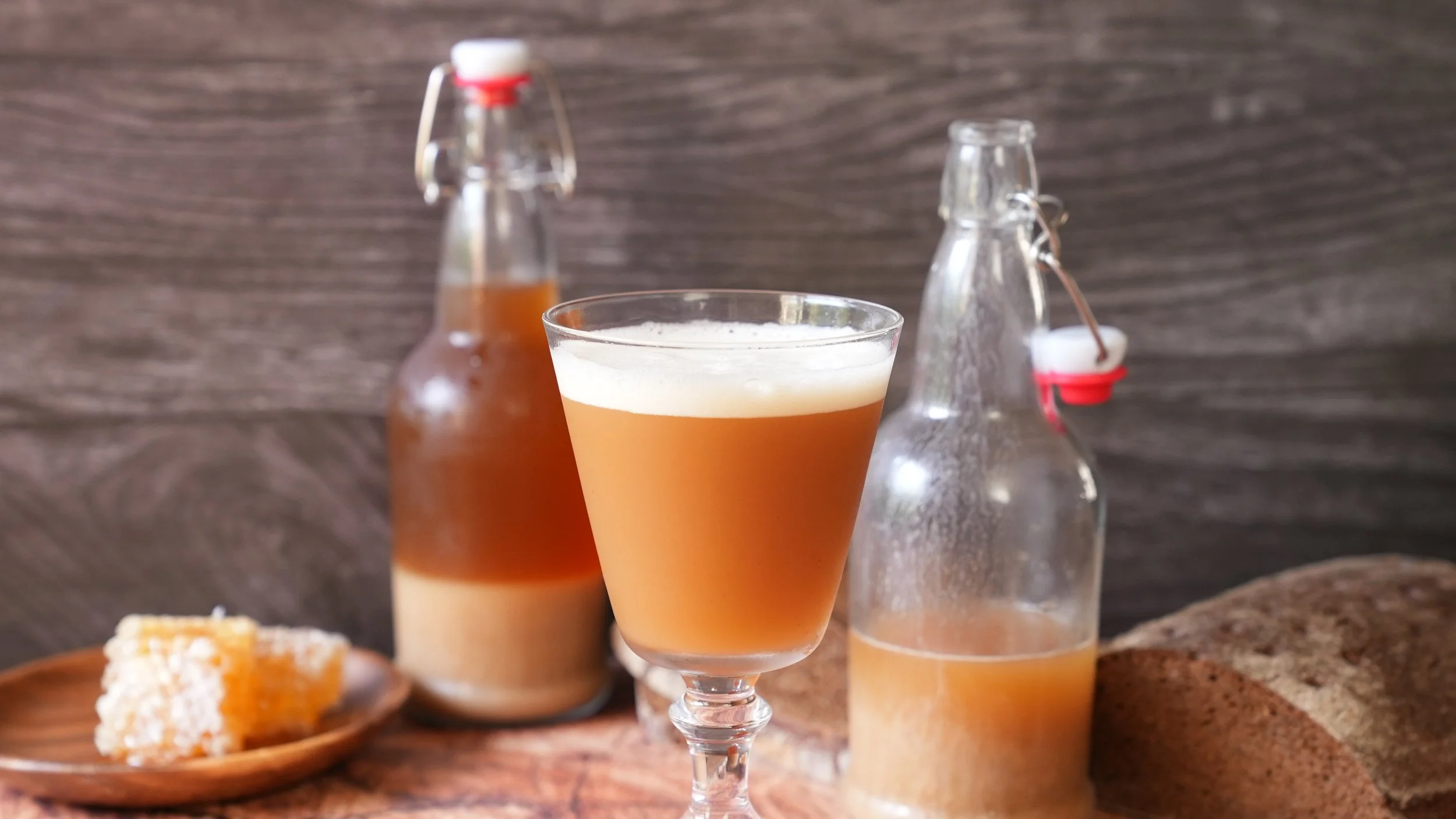
Cloudy, lightly effervescent dark rye bread kvass
City/Region: Russia
Time Period: 16th Century
Kvass has been made in Eastern Europe for hundreds of years. It can be made with things like flour, beets (like for borscht), and bread. This recipe from 16th century Russia uses bread without any additional yeast. It’s pretty bare bones when it comes to instructions, so I used other recipes from the 18th and 19th centuries to fill in the gaps.
I was pleasantly surprised with how much I liked this. I used dark rye bread and didn’t add the optional brewer’s yeast or raisins, and I ended up with a lightly effervescent kvass that tasted like I was drinking that loaf of good dark rye bread with a wonderful sweetness. I highly recommend making it; it’s easy, only requires a few ingredients, and is absolutely delicious.
“Ordinary kvass.
To brew ordinary kvass, take four parts honey and strain it until clear. Put it in a jar and ferment it using an ordinary soft loaf, without additional yeast. When it is done, pour it into a cask. ”
Ingredients:
- 3 quarts (3 L) water
- 1 lb (450 g) dark rye bread*
- 2/3 cup (225 g) raw honey*
- A pinch of brewer’s yeast**, optional
- A handful of raisins**, optional
*See Notes below.
**These weren’t included in the 16th century recipe, but occur in 18th and 19th century recipes and ensure a smoother fermenting process and add flavor.
Instructions:
- This step is optional, but brings out a little more flavor. Preheat the oven to 350°F (175°C). Tear the bread into small pieces and arrange them in a single layer on a baking sheet. Bake for about 5 to 10 minutes, or until the bread is toasted.
- In a large pot, bring the water to a boil. Once it boils, turn the heat off, then add the bread pieces. Cover the pot and let it soak for at least 2 hours, preferably overnight.
- After the bread has soaked, transfer the bread and water to a large sterilized container for fermenting. Stir in the honey. If you’re using the brewer’s yeast and raisins, add them now. Cover the container with some cheesecloth, securing it tightly, or cover with a lid specifically for fermenting with an airlock. Do not cover the container tightly with a regular lid, as the gases from fermenting will make the container explode. Put the container in a warm place.
- After a few hours, the bread should have fallen to the bottom. Leave the jar in a warm place for about three days. By the second day, you should start to see some of the bread pieces floating either suspended in the liquid or on top of it. This means that the fermentation process is working and is making little bubbles. The kvass is done fermenting when most of the bread, and the raisins if you’re using them, are floating on the top.
- Strain the kvass through several layers of cheesecloth. You won’t get all of the sediment out, but you’ll get the pieces of bread and some of the sediment. I strained mine 3 times. The kvass will be cloudy. A 19th century cookbook suggests saving some of the sediment for fermenting the next batch, then feeding the rest to the cows.
- Transfer the kvass into sterilized bottles with locking tops. Leave the bottles at room temperature for several hours to lightly carbonate, I left mine out for 18 hours, then transfer them to the fridge.
- Serve the kvass forth within 1 week. When you pour it, some of the sediment will mix with the rest, and this is how it’s supposed to be drunk.
Notes
Traditionally, the bread is usually a black bread or dark rye, but you can use anything you like.
It’s important that the honey is raw in order to get as much natural yeast into the kvass as possible.