

Medieval Peasant Bean Porridge
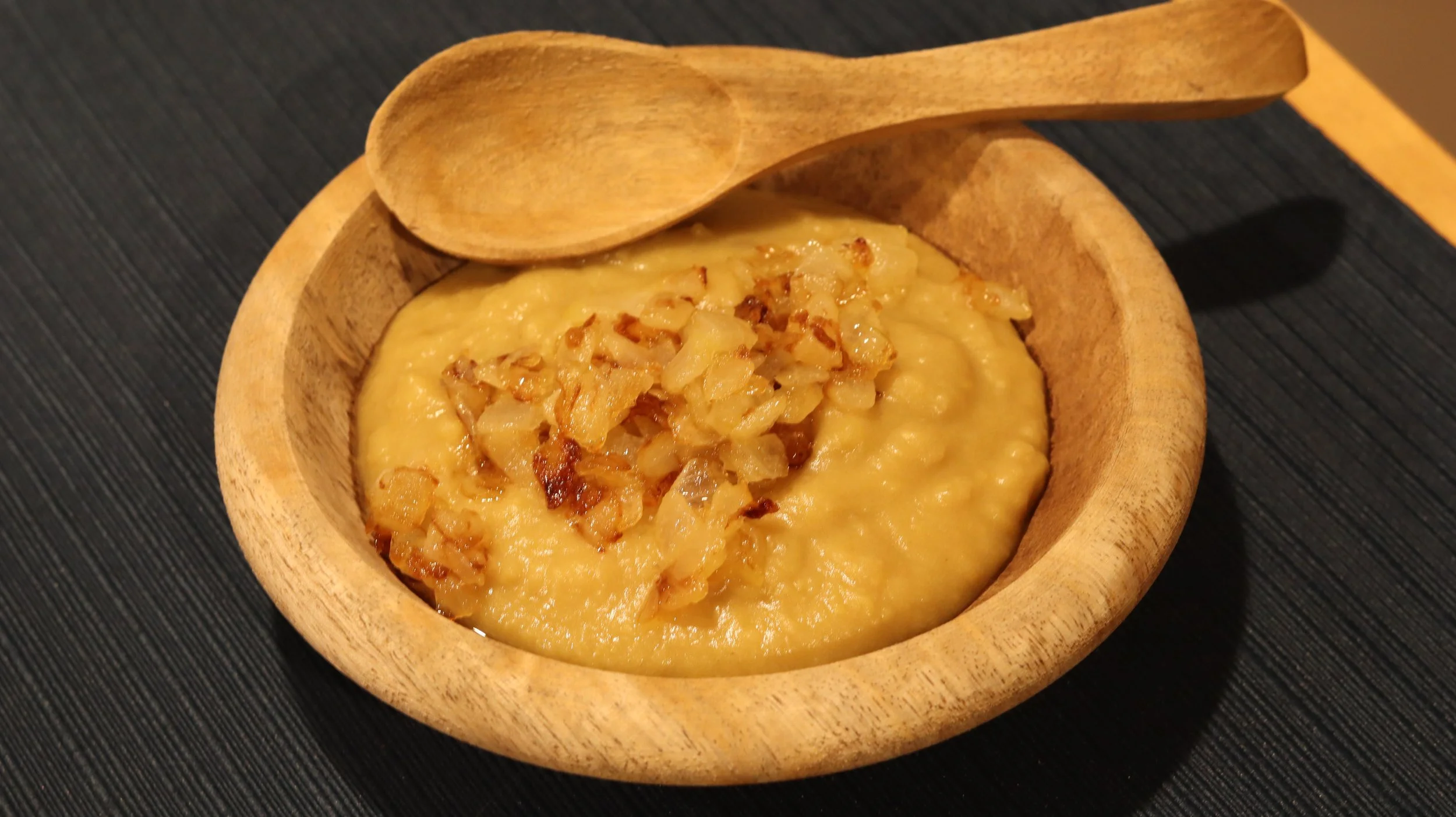
Thick mashed bean porridge topped with fried onions
City/Region: England
Time Period: c. 1390
We don’t have recipes for what medieval European peasants ate because, frankly, no one cared enough about it to write it down. This recipe comes from The Forme of Cury, which was a cookbook from around 1390 that was used in the royal kitchens of Richard II. I’ve swapped out the ingredients that were expensive in the Middle Ages for peasant-friendly alternatives.
While very simple, this is a hearty dish and the onions add wonderful flavor. Use whichever beans, alcohol or other liquid, and fat you like. There are only 5 ingredients, so best to use what you enjoy.
“Makke
Take drawen [dried] benes and seeth [boil] them well. Take them up of the water and cast them in a morter grynde them all to doust till thei be white as eny mylk. Chawf [warm] a little rede wyne, cast thereamong in the gryndyng, do thereto salt, leshe [pour] it in disshes. Thenne take Oynouns and mynce them smale and seeth them in oile til they be al broun, and florissh the dishes therwith. And serve it forth.”
Ingredients:
- 3 cups (450 g) dried beans*
- 1/2-1 cup (118-236 ml) wine, ale, or mead*
- Salt, to taste
- 1 onion, minced
- 1-2 tablespoons butter, oil, or lard*
*See Notes below.
Instructions:
- Cook the dried beans. Depending on what kind of bean you’re using, the times can vary a bit, so refer to the package for instructions.
- When the beans are done, drain them and place them in a bowl. Grind them up using a pestle or a potato masher. I made mine mostly smooth with a bit of texture, but you can do yours however you like.
- Heat the wine, ale, or mead in a saucepan until it’s steaming, then pour it into the beans and mix them together. Use more or less liquid depending on how thick you want the porridge to be. Add salt to taste.
- In a pan over medium heat, heat the fat, then add the onions. Fry, stirring frequently, for about 7 to 10 minutes, or until the onions are nicely browned.
- Dish the beans into a bowl, then top them with some fried onions, and serve it forth.
Notes
Most of the beans we use today are New World beans, so the closest thing to medieval European beans that’s widely available are fava beans, and that’s what I used (peeled), but use whatever you like.
The historical recipe calls for wine, but it wasn’t really available to many peasants, so ale or even mead would be a more peasanty choice. The amount you use depends on how thick you want the porridge to be.
In medieval England, the writers of The Forme of Cury were probably referring to olive oil, which was imported and expensive. A peasant would much more likely have access to butter or lard.